The Hallstatt Necropolis at Beidaud: New Burials Investigated
Research Context
The Hallstatt necropolis at Beidaud, located in Tulcea County, is one of the most important Early Iron Age sites in Dobruja. Discoveries made during campaigns carried out by the Dinu Theodorescu Archaeological Laboratory since 2016 have contributed substantially to our knowledge of communities from this period.
The New Funerary Complexes
The 2025 campaign led to the complete investigation of eight new cremation burials, thereby extending the previously documented series. The funerary complexes display a coherent spatial organisation, suggesting the existence of strict social norms governing burial ritual.
The primary funerary urn in one of the burials was recovered intact — an exceptional situation in field archaeology. The vessel, of Basarabi type, bears an elaborate incised decoration with geometric motifs characteristic of the middle Hallstatt period (9th–8th century BC).
Funerary Inventory
The inventory of the eight burials includes:
- Basarabi-type ceramic fragments with incised geometric decoration
- Bronze fibulae of various types (simple bow, profiled bow)
- Bronze bracelets with terminals in the form of stylised serpent heads
- A bronze pin with an ornamented head
- Iron weapon fragments (spearhead, dagger fragments)
The presence of weapons in the funerary context indicates the high social status of the deceased, possibly a warrior or community leader.
Interdisciplinary Analyses
The osteological materials recovered will be subjected to anthropological and isotopic analyses, with the aim of determining the age, sex, and possibly the geographical origin of the interred individuals. Collaboration with specialist laboratories across Europe will provide precise data on the diet and mobility of Early Iron Age populations.
Significance of the Site
The Beidaud necropolis furnishes essential data for understanding the social organisation and religious practices of Dobruja communities in the Early Iron Age. Continued research remains a priority for our laboratory, with a view to publishing a complete corpus of the discoveries.
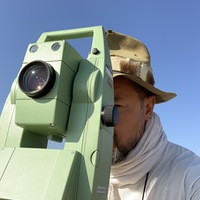
Valentin Bottez
Director — Prof. dr. habil.
Prof. dr. habil. Valentin Bottez leads the Dinu Theodorescu Archaeological Laboratory and coordinates systematic research at Histria and Beidaud. A specialist in the history and archaeology of the Greek world around the Black Sea, he has published extensively in international journals and directed dozens of excavation campaigns.